Prospect research, qualification, review, and follow-through
THE BUSINESS PROBLEMHow can prospect research, drafts and follow-up stay organized while keeping the sender in control?
RESULT & STATUSI built a 100-prospect queue and ran an initial pilot with manual review and sending. The system is in internal use.
I designed and operate an Airtable CRM workflow through AI chat and connected tools. I review qualification, drafts and next actions, and corrected overlapping follow-up plans so callbacks and holds stay intact. How I build and review →
I organized the work around the decisions needed before outreach: whether a prospect fits, what the research supports, whether the contact is appropriate, and what factual next action should follow.
My decisions
Review before acting
Keep qualification, proposed drafts and manual sending separate. A draft is something to review, not proof a message was sent.
Preserve exceptions
Represent holds, stop conditions and requested callbacks so a generic cadence cannot overwrite a specific contact outcome.
Reconcile the record
Check existing actions before creating more, and distinguish planned activity from completed work.
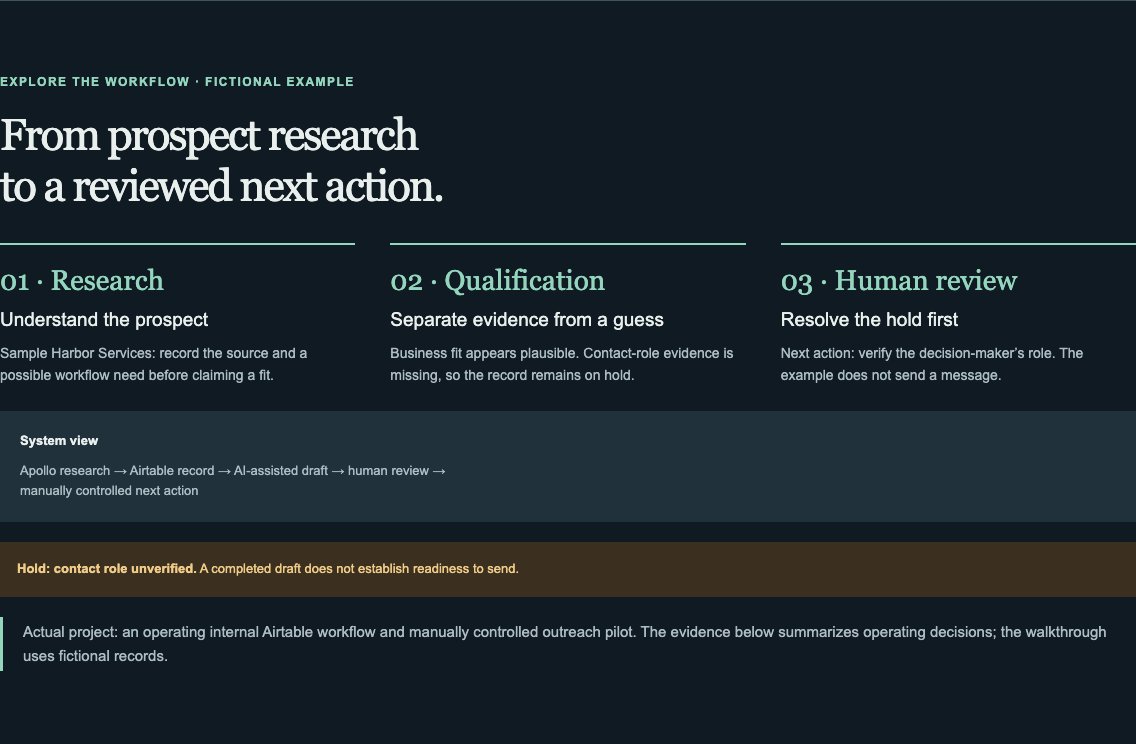
Explore the workflow · Fictional example
From prospect research to a reviewed next action.
01 · Research
Understand the prospect
Sample Harbor Services: record the source and a possible workflow need before claiming a fit.
02 · Qualification
Separate evidence from a guess
Business fit appears plausible. Contact-role evidence is missing, so the record remains on hold.
03 · Human review
Resolve the hold first
Next action: verify the decision-maker’s role. The example does not send a message.
System view
Apollo research → Airtable record → AI-assisted draft → human review → manually controlled next action
Hold: contact role unverified. A completed draft does not establish readiness to send.
Actual project: an operating internal Airtable workflow and manually controlled outreach pilot. The evidence below summarizes operating decisions; the walkthrough uses fictional records.
Evidence and outcome
Illustrative workflow with fictional data · Private CRM is not shown · Captured September 2026
The project materials below show the requirements, decisions and workflow behind this case. Interactive examples use fictional data.
An operating workflow with visible controls
The September 4 operating review documents a 100-prospect queue and an initial pilot. I kept completed activity, planned follow-up and unresolved items separate so the record reflects what actually happened.
Evidence: Final September 4, 2026 operational reconciliation; private records paraphrased.
A correction changed the next action
Prior calls overlapped with a generic future email schedule. I had the follow-up plans corrected to preserve requested callbacks and holds and reflect the actual contact outcomes.
A requested callback keeps its requested-call path.
An unresolved identity or disposition stays on hold.
Previously existing actions are reused where appropriate instead of duplicated.
Evidence: Final operational correction record; all personal and company details omitted.
This is actual internal operation through Airtable, Apollo, AI-assisted tools and human review. It does not establish unattended outreach, sustained campaign conversion or revenue results.